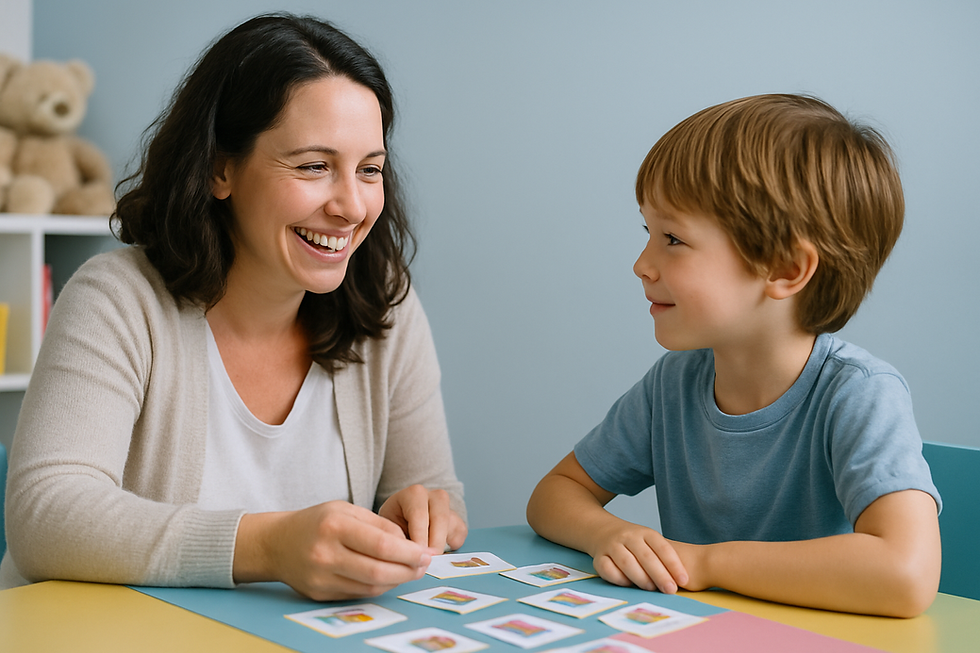
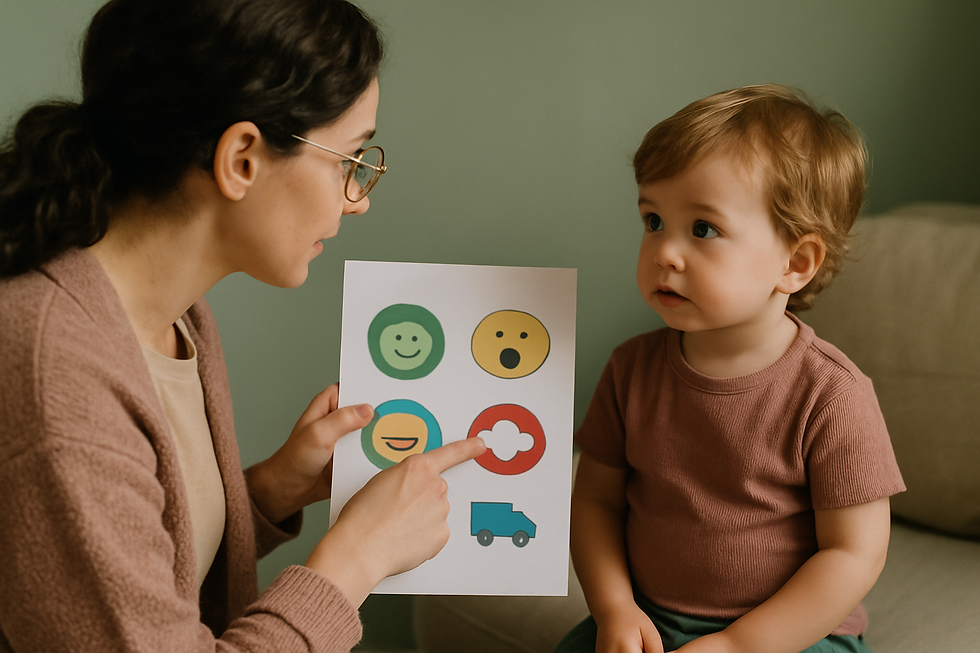
Speech Tips for Late Talkers: How to Include Siblings

Updated: 2 hours ago

In this article we will discuss:
A speech-language pathologist shares ways the whole family can help your toddler struggling with speech delay!
Practice makes perfect. We have all heard that phrase and we have also learned that the more practice and exposure we have to something new, the better it will get. To all the parents and caregivers who are wondering HOW can you help your child, this CAN be a team effort!
As a speech-language pathologist who has worked with people of all ages between 0-102, the best advice I can provide is to integrate the entire family. You have made the first step and enrolled in online speech therapy for your toddler. That itself is a great step in the right direction. Your child’s speech-language therapist has provided you with some resources and ideas on how you can help your late talker toddler. But you might be wondering if there’s anything more you can do?
Here’s a secret, even your other kiddos can help with your late talker toddler! Having peer exposure and the ability to target speech goals with their siblings can be a great way to encourage and expand language for toddlers struggling with speech delay.
Importance of Family Integration
Whether your other children are a few years older, or five or ten years older, there are techniques you can implement to encourage them to help your late talker toddler no matter the activity.
Oftentimes, speech-language pathologists suggest to parents that the best way to include the family in carryover and generalization of target goals is to integrate those goals into your daily and normal routine. Whether this is through meal, bath, or playtime, these routine tasks are essential and ‘easy’ ways to include the entire family to not only spend time together but to work towards the same goal, to help your late talker toddler.
Encourage family members to take part!
We know that, as parents and caregivers who are on the go, you value time spent with your child, while also helping their development. Below we list some methods and techniques you can use to incorporate fun and interactive ways to practice speech exercises with your child.
It is also important to keep your child engaged during tasks that may not be their preferred tasks, like school work and any additional practice. You can target speech and language goals during school work using some of the methods below. Encourage older siblings to help their younger siblings with homework, making it more fun!
Techniques and methods to help your late talker toddler
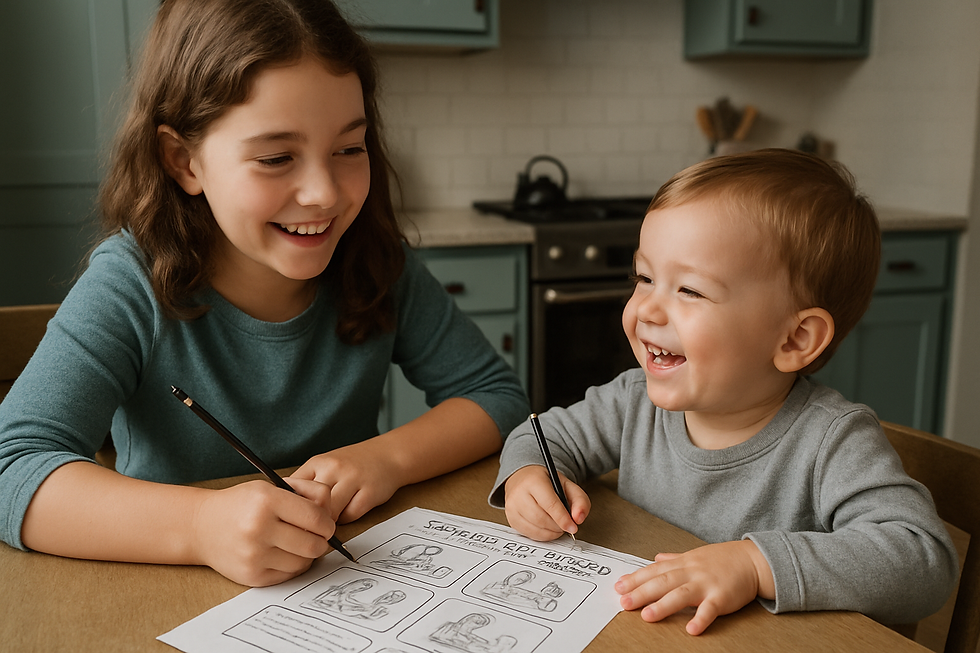
Here, we’ve included some great ways to encourage siblings to help your toddler. These are techniques that can be done 1-1 or in a group setting. These techniques can be implemented across the board.
An important note: if your older child has had difficulty with their speech and language in the past, encourage them to assist your little one in implementing any strategies that helped them out. It is possible for everyone to help!
Examples:
Mold versus Model: We are NOT talking about the mold that grows when things are moist… but rather shaping your late talker toddler’s understanding on how communication is built. The siblings can be encouraged to take turns in conversation while playing with a set of blocks, or Mr. Potato Head, or even a play-farm! On the other hand, having your child model ‘how’ things happen, such as, “Yes, the cat says ‘meow’ but look at this, the cow goes ‘MOO’” is a great way to model language while also keeping in mind positive reinforcement.
Online speech therapy for toddlers works similarly. Speech-language pathologists want to help your child engage while also encouraging and expanding their language skills. Two key ways to ‘model’ expressive and receptive language skills are:
Sharing thoughts and answering wh-questions about reading material
Targeting spatial concepts through identifying images in books.
Ready, Set, LISTEN!: We have heard of the coined term “we listen with our ears and look with our eyes!” Encourage your older children to actively listen to their younger siblings. Ask them to look out for ‘key words’ and ‘respond,’ to assist their siblings with expanding their vocabulary. This way you can also associate ‘listening’ skills with ‘recall tasks’ by doing activities such as puzzles, vocabulary, responding and recalling items addressed during the school day. After your virtual speech therapy session, you can also discuss the learned and targeted goals.
Simon Says….: Try a playful switch on Simon Says by using the sibling’s name instead of ‘Simon,’ and use this game to target identifying basic body parts and following directions. Incorporate directives such as:
Imitation of simple words (‘Simon says, say watermelon!’)
Imitation and responding to simple questions and 2-word phrases (‘Simon says, point to your knee!’)
Identifying foods (‘Simon says, name the red fruit on the table!’)

Target Social Skills
Given the current atmosphere and status of our world, we are all doing the best we can. Parents are often concerned with how they can target social skills for their kids. We miss our families and/or friends, and are not sure when there will be a sense of normalcy.
Parents often wonder, how can I provide my child with increased social interaction? My best advice…Zoom! Zoom has provided families with a way to obtain speech therapy, especially using our Better Speech Platform, but you can also use it as a method to communicate and keep in touch with friends and family.
When talking with others over Zoom, help your kids practice social skills such as eye contact, taking turns, and listening skills. You could also consider using social scripts. These ideas are great methods to increase carryover of target goals from online speech therapy with different members of the family, despite the age of the ‘helper’!
At Better Speech, we know that you deserve ideas and therapy that works for you and your family. We have experts in your late talker toddler’s needs and assign the right therapist; not just the therapist that happens to be in your area. We offer online speech therapy services convenient for you and tailored to your child's individual needs. Our services are affordable and effective - get Better Speech now.


Frequently Asked Questions
At what age should I be concerned if my toddler is not talking yet?
Most children say their first words by 12 months and use about 50 words by age 2. If your toddler is significantly behind these milestones, it is worth speaking with a speech-language pathologist sooner rather than later. Early intervention tends to produce the best outcomes, so trust your instincts and seek an evaluation if something feels off.
How can older siblings help a late-talking toddler without replacing the role of a speech therapist?
Siblings can model simple, clear language during everyday play, narrate what they are doing, and avoid finishing the toddler's sentences so the younger child has time to respond. These natural interactions reinforce the techniques a speech therapist teaches at home. Think of siblings as supportive practice partners rather than therapists, keeping activities fun and low pressure.
Should siblings talk more or less around a late talker?
Quality matters more than quantity. Encourage siblings to slow down their speech, use short sentences, and give the late talker plenty of wait time before jumping in. Speaking in a calm, face-to-face way helps the toddler focus on words and mouth movements. Loud, fast, overlapping conversations can make it harder for a late talker to process and respond.
Can watching siblings talk actually help a toddler start speaking sooner?
Yes, toddlers are natural imitators and often find slightly older children highly motivating to copy. Siblings can model target words during play, songs, and daily routines in a way that feels exciting rather than instructional. Pairing this sibling modeling with guidance from a licensed speech-language pathologist, like those at Better Speech who offer licensed, insurance-ready care with no waitlists, can accelerate progress meaningfully.
What should I avoid doing when trying to encourage my late talker at home?
Avoid putting the toddler on the spot by repeatedly asking them to say words on demand, as this can create anxiety and shut down communication attempts. Try not to correct every error directly. Instead, gently restate what your child said using the correct form. Creating a relaxed, playful environment where talking feels safe and rewarding is far more effective than drilling.
About the Author

I’m a seasoned educator in speech therapy with over six years of experience helping people navigate challenges in communication. Throughout this time, I’ve found joy in guiding individuals through a variety of therapeutic journeys, from toddlers with apraxia to seniors with dysphonia.
I’m passionate about demystifying this complex world of speech therapy and helping readers around the globe achieve clear and effective communication. When I’m not writing about speech, you’ll often find me reading, traveling or spending time with friends and family.